Proyecto Ascender

We will implement three use cases to demonstrate the capabilities of the ascender architecture to facilitate the development, deployment and efficient execution of advanced data analysis services with real socio-economic and scientific value. To do so, the technology will be validated in two real pilots in Barcelona and one in the Denomination of Origin (DO) Costers del Segre in Lleida.

In each of these cases, ascender will install different sensors and computing and communication resources, where the analysis methods capable of extracting the necessary knowledge for each use case will be executed, thus increasing the efficiency of these sectors.

iconos_usecases_1

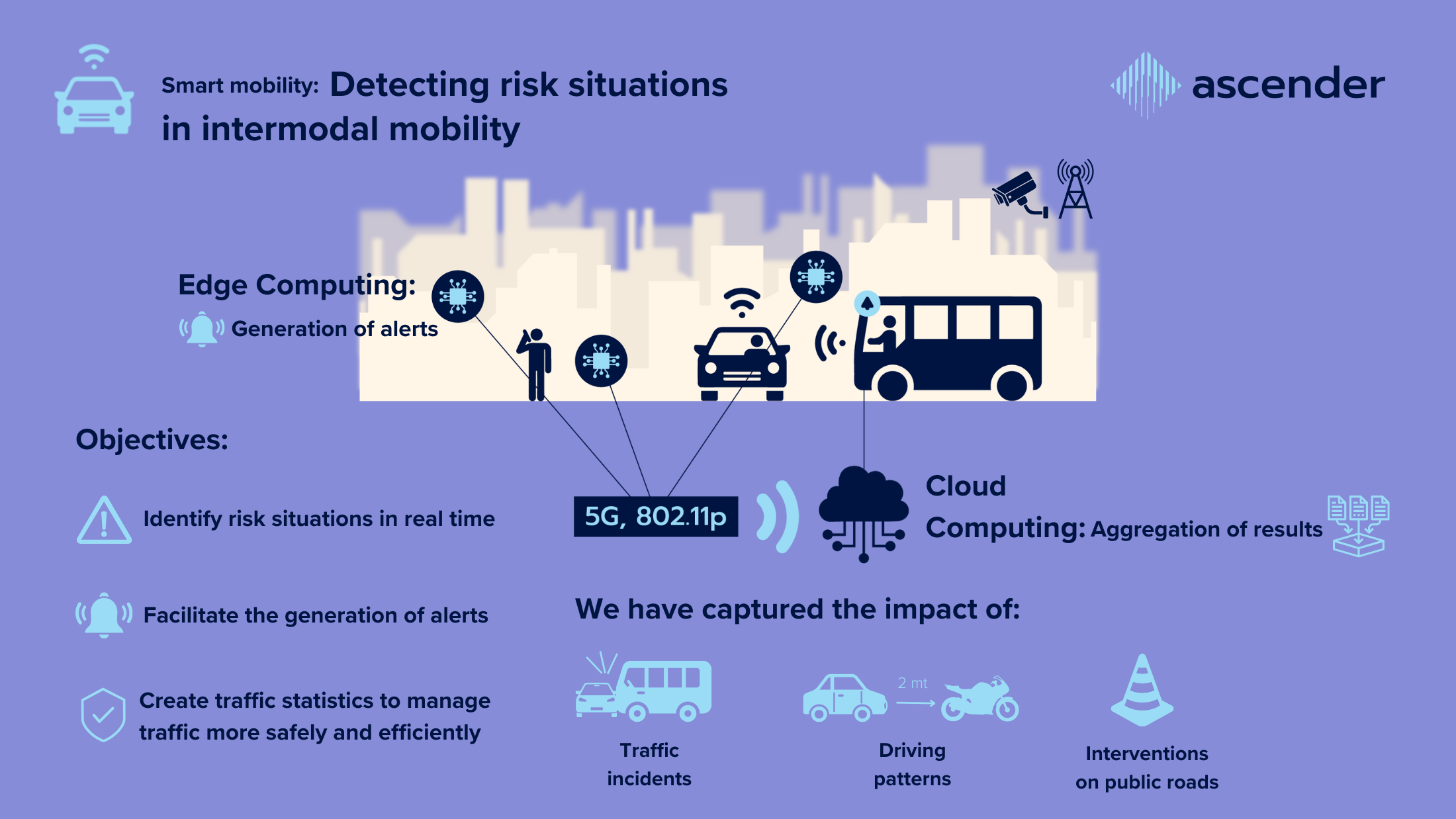
Smart mobility: Detecting risk situations in intermodal mobility

This use case addresses the need for smarter, safer and more connected city mobility.

Its main objective is to identify risk situations in real time that can cause traffic accidents in highly complex urban areas, with particular interest in the interaction between the network of trams, buses, taxis, cars, motorbikes, bicycles, and pedestrians.

This will facilitate the generation of alerts (e.g. sending an alarm signal to connected vehicles) and the creation of traffic statistics (congestion, violations, risk situations, etc.) to manage traffic more safely and efficiently.

edge-cloud_usecases_edge
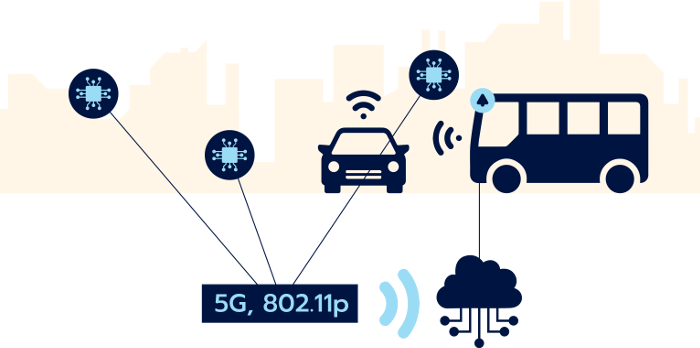
Edge computing will allow the processing of multiple sources of extreme data and the sending of alerts generated by ultra-low latency communication technologies (5G, 802.11p, etc.).
edge-cloud_usecases_cloud
On the other hand, through cloud computing, the results of analytics executed on edge resources will be aggregated to implement better mobility policies.
Clic to expand the full infographic
iconos_usecases_2

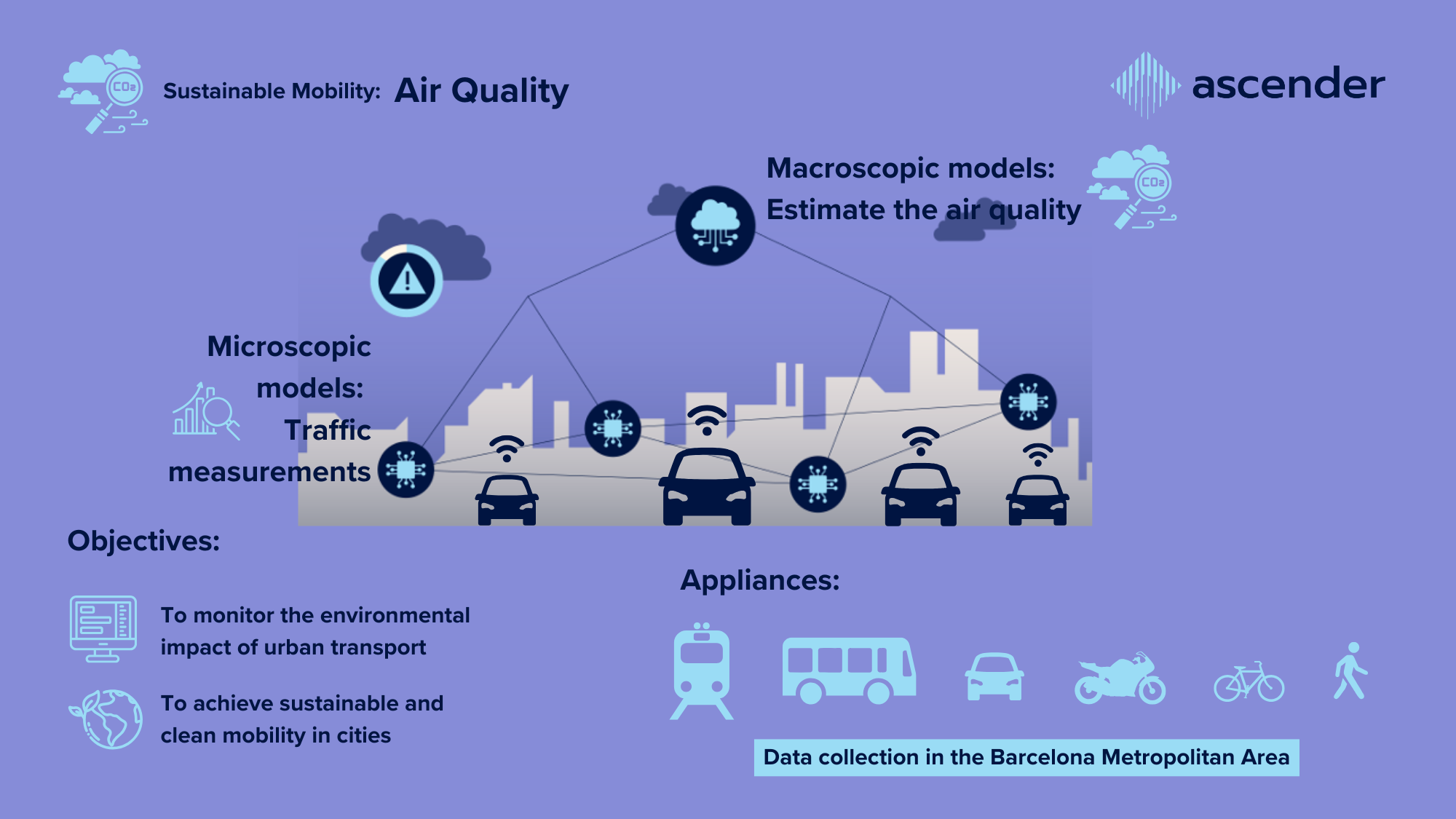
Sustainable Mobility: Air Quality

Clic to expand the full infographic

The main objective of this use case is to monitor the environmental impact of urban transport in order to achieve sustainable and clean mobility in cities.

ascender will develop workflows including the following models:

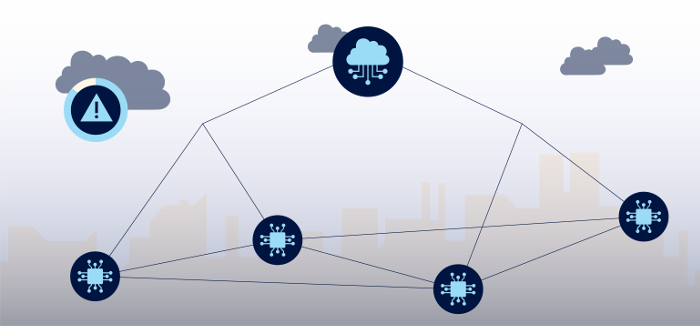
Microscopic (mainly on edge computing resources), enhancing existing estimation solutions and based on the use of real-time traffic measurements (vehicle type, speed, acceleration, etc.).
edge-cloud_usecases_edge
Macroscopic (on cloud resources), deployed and executed by continuous computing to feed macroscopic air quality models [Caliop] and estimate the air quality of large urban areas.
edge-cloud_usecases_cloud
This will serve, among other purposes, to capture the impact of specific traffic incidents and driving patterns, e.g. the impact of delivery vehicles waiting with the engine running, interventions for road works that hinder traffic, etc.
iconos_usecases_3

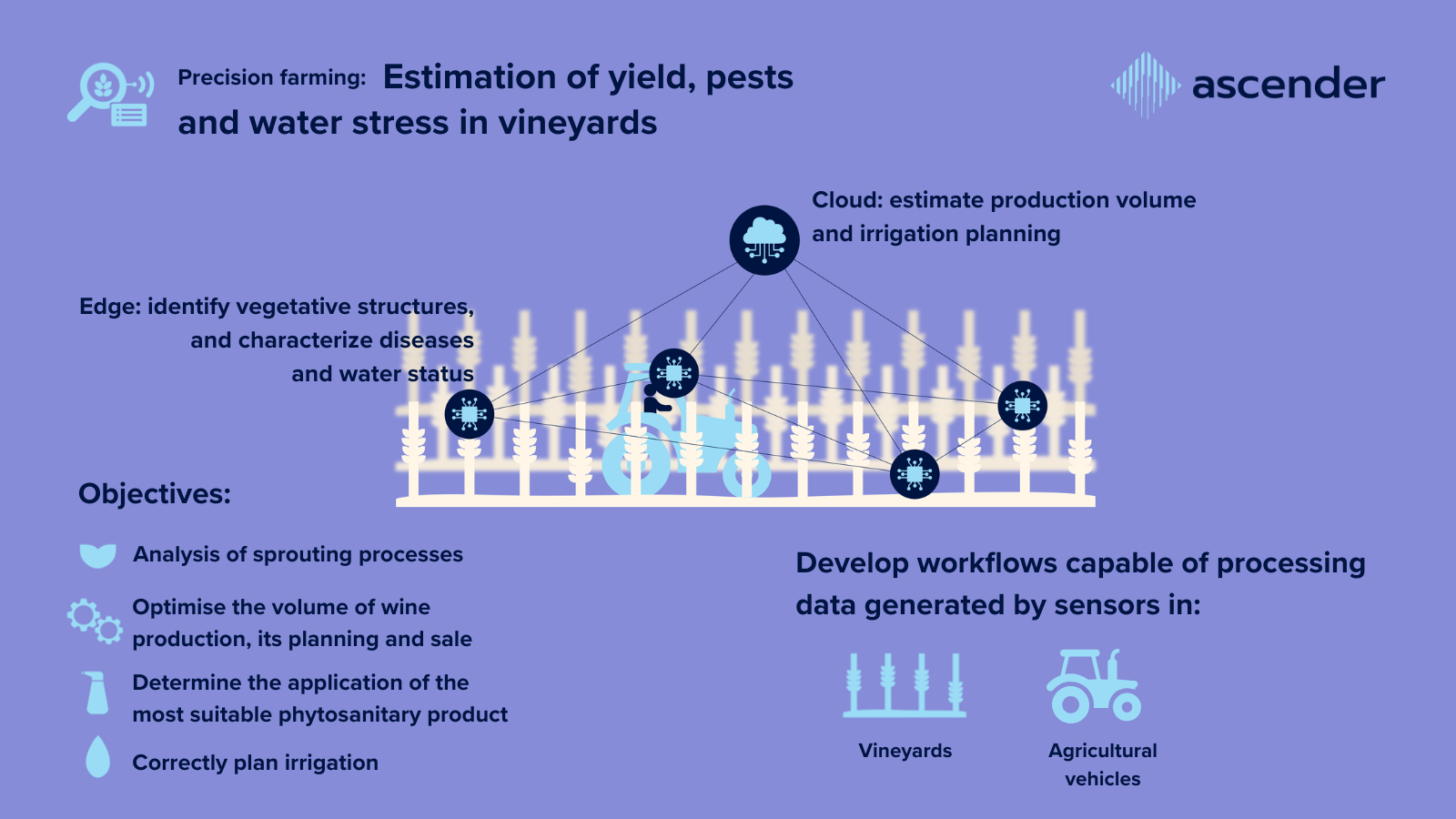
Precision farming: Estimation of yield, pests and water stress in vineyards

Focusing on grape cultivation, ascender will develop workflows in a continuous computation, including:
edge-cloud_usecases_edge
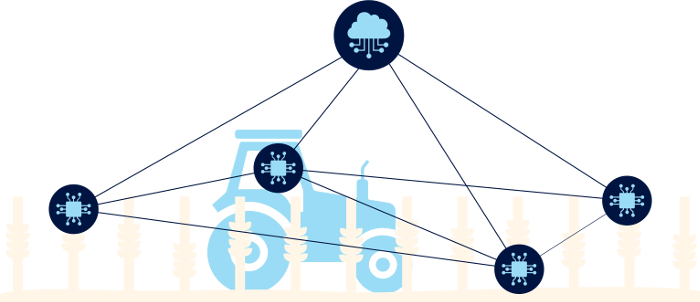
Edge computing resources are installed in vehicles and stations to run analytics to identify vegetative structures (shoots, grapes and faults) and characterize diseases and water status.
edge-cloud_usecases_cloud
On the other hand, thanks to cloud computing resources, we will be able to estimate production volume and irrigation planning.

The analysis of sprouting processes will allow us to estimate and optimise the volume of wine production, as well as its planning and sale. Furthermore, the detection and characterisation of diseases allow us to determine the application of the most suitable phytosanitary product at a very fine granularity.

Finally, determining the plant’s water status will allow us to plan irrigation correctly, depending on the soil’s water retention capacity, the plant’s climatic and energetic conditions, and its phenological moment.

Clic to expand the full infographic
Scroll to Top